

Universal Audio Suppressor Anti Recording Device


- In Stock
- Free Shipping
Below are the available bulk discount rates for each individual item when you purchase a certain amount
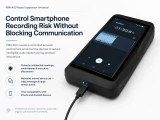
Universal Audio Suppressor Anti Recording Device
-
Key Features:
- Targeted Audio Suppression:
Reduces the effectiveness of smartphone microphones in close proximity, limiting the ability to capture intelligible speech. - Maintains Device Functionality:
Phones remain fully operational, with calls, messages, and applications continuing as normal. - Controlled Acoustic Environment:
Creates a localized suppression zone around the device, addressing microphone-based recording without signal interference. - Immediate Operation:
No setup, pairing, or configuration required. Position the device and it operates automatically. - Cross-Platform Compatibility:
Works with iPhone and Android smartphones across standard recording and video applications. - Discreet Deployment:
Designed for use in professional environments where privacy is required without disrupting workflow or communication.
- Targeted Audio Suppression:
PBN-ASU Audio Suppressor Universal
The PBN-ASU Audio Suppressor Universal is a professional privacy control solution designed to reduce the risk of smartphone audio recording in sensitive environments.
Smartphones are now a constant presence in meetings, consultations, and operational settings. With built-in microphones and recording capability across standard applications, they introduce a persistent and often unmanaged exposure point during confidential discussions.
Traditional controls, such as removing devices or using signal-blocking solutions, can be effective but are often impractical in real-world environments where communication must remain active.
A Controlled Alternative
The PBN-ASU is designed to address the primary vulnerability — smartphone microphone recording — without interrupting normal device use.
Rather than blocking signals, the system creates a controlled acoustic environment around the device. This reduces the ability of nearby smartphones to capture intelligible speech while allowing calls, messages, and applications to function as normal.
This approach enables organisations to maintain operational continuity while introducing a practical layer of privacy protection.
Core Function
The PBN-ASU reduces the effectiveness of smartphone microphones within its operating zone.
When a device is positioned correctly, the system limits the clarity and usability of captured audio across standard recording and video applications. This applies regardless of the application in use, as all rely on the same microphone input pathway.
The system operates by introducing controlled acoustic interference within the immediate vicinity of the device, affecting how microphones capture speech.
At the same time, normal device functionality remains unaffected. Calls, notifications, and applications continue to operate without disruption.
Designed for Professional Environments
The PBN-ASU is suited to environments where confidentiality is required but device access cannot be restricted.
This includes:
- Executive and board-level meetings
- Legal and advisory consultations
- Research and development environments
- Government and secure operational settings
In these scenarios, the ability to maintain communication while reducing recording risk is critical.
Practical Security Without Disruption
Signal-blocking solutions isolate devices completely, removing connectivity and limiting usability.
The PBN-ASU provides a more practical approach by addressing how recordings actually occur — through the smartphone microphone — while allowing devices to remain active and accessible.
This enables organisations to apply a layer of control without disrupting workflow or communication.
Usage Guidance
For effective operation, the smartphone should be placed within the intended operating zone of the device and left in position during use.
Brief interaction, such as checking notifications or viewing messages, is acceptable. However, continuous handling or extended use within close proximity is not recommended while the system is active.
Maintaining correct positioning ensures consistent performance throughout the session.
Simple by Design
The PBN-ASU is designed for immediate use in professional environments.
There is no setup, no configuration, and no reliance on software or user input. Once positioned correctly, the system operates automatically, allowing it to be integrated into existing workflows without training or disruption.
Manufacturer-Backed Smartphone Microphone Disruption
Professional Privacy Control for Meetings, Legal Discussions & Sensitive Business Environments
The PBN-ASU Audio Suppressor Universal is a dedicated smartphone microphone disruption system designed for professional privacy control. Unlike general room suppressors, it works at the point of vulnerability: the smartphone microphone itself. When correctly positioned inside the dock, the system disrupts microphone capture while allowing the phone to remain powered, connected, and accessible.
Built Around a Test-and-Confirm Process
PBN-TEC does not treat this as a “buy it and guess” product.
The PBN-ASU is supported by a practical test-and-confirm process so professional users, integrators, and security teams understand exactly how the unit performs, how the phone should be positioned, and what the solution is designed to achieve.
This ensures that users who understand the product get exactly what they need from the solution: a reliable, practical method of reducing smartphone recording risk without interrupting normal communication.
Open to Integrators and Specialist Partners
PBN-TEC is actively open to working with security integrators, TSCM providers, corporate security teams, government suppliers, and specialist consultants seeking a proven solution for smartphone recording control.
The requirement is simple: allow smartphones to remain present, while preventing them from becoming usable recording devices.
The PBN-ASU provides a direct answer to that requirement.
Case Study: Reducing Smartphone Recording Risk in Daily Business Operations
A professional services organisation identified a growing privacy risk across its daily operations. Smartphones were routinely present in meetings, consultations, internal reviews, and management discussions.
While mobile access was necessary for normal business activity, the organisation recognised that any modern smartphone could also be used to record sensitive conversations through standard voice recorder, video, or meeting applications.
Removing phones completely was not practical. Staff, visitors, clients, and external advisors often required access to calls, calendars, authentication apps, and messages. The objective was therefore not to block devices, but to introduce a practical deterrent against unauthorised audio recording.
The organisation deployed smartphone audio suppression and phone-control solutions as part of its meeting-room privacy process.
1. Executive and Management Meetings
Senior leadership meetings often include commercial plans, staffing decisions, financial performance, supplier negotiations, and internal strategy. These discussions can be damaging if recorded, leaked, or taken out of context.
In this environment, the PBN-ASU acts as a visible and practical deterrent. Phones can remain present and connected, but when positioned correctly inside the dock, the microphone capture pathway is disrupted.
Effective deterrent value: it signals that the organisation actively manages recording risk and does not rely only on trust, policy, or verbal confidentiality reminders.
2. Legal, HR, and Advisory Discussions
Legal consultations, HR meetings, disciplinary discussions, employment reviews, and advisory sessions often involve sensitive personal, contractual, or commercial information. These are exactly the types of conversations where unauthorised recording can create legal, reputational, or operational problems.
Using the PBN-ASU gives the organisation a practical middle ground. Devices do not need to be banned from the room, but they can be placed in a controlled position during the discussion.
Effective deterrent value: it discourages opportunistic recording and reinforces the seriousness of confidentiality in sensitive internal or client-facing discussions.
3. R&D, Supplier, and Commercial Review Meetings
Product development, technical planning, supplier pricing, contract negotiations, and new business discussions often contain commercially valuable information. In many cases, the threat is not a sophisticated surveillance device. It is a standard smartphone placed on a table, in a bag, or beside meeting notes.
The PBN-ASU helps protect these daily business discussions by addressing the microphone recording risk directly. It is especially useful in environments where external parties, contractors, consultants, or suppliers are present and where device removal may be awkward or impractical.
Effective deterrent value: it creates a clear technical control around commercially sensitive conversations and helps protect intellectual property, pricing, strategy, and negotiation positions.
Summary
The strongest value of the PBN-ASU is the combination of privacy control, visible deterrence, and practical usability.
In daily business environments, smartphones cannot always be removed, blocked, or banned. The PBN-ASU provides a more workable approach by allowing devices to remain active while disrupting the microphone capture pathway when correctly positioned inside the dock.
For executive meetings, HR and legal discussions, and commercially sensitive reviews, this creates a professional layer of protection that supports confidentiality without disrupting normal business communication.
User Groups
Corporate Security & Executive Teams
Enables structured control of personal devices during sensitive discussions without removing usability. Aligns with boardroom protocols and compliance-led environments.
Legal, Investigations & Advisory
Supports interviews, consultations, and case discussions where devices remain present but audio capture must be managed consistently.
Government & Regulated Environments
Suitable for controlled rooms where device handling policies are enforced. Provides a practical alternative to full device isolation workflows.
Security Consultants & Integrators
Integrates into room procedures as a repeatable, proximity-based control that does not rely on complex setup or user training.
Pro Tips (Operational Use)
Proximity Drives Outcome
Effectiveness increases as the device approaches the unit. Best performance is achieved when phones are placed on the desk, near the ASU.
Control the Placement
Define a simple rule: devices remain within the working area of the unit during discussions. This replaces “remove the phone” with “place the phone here.”
Desk-Level Deployment
This is a point-of-capture control, not a room-wide system. Position on the table where devices naturally sit.
Always-On in Controlled Rooms
Keep units powered in spaces used for sensitive conversations to remove reliance on manual activation.
Scale with Table Size
Extend coverage by adding units so all participants remain within proximity.
Deployment Scenarios
Boardrooms & Meeting Tables
Units placed centrally (or distributed across larger tables) where phones are typically set down.
Interviews & Consultations
Position between participants to manage device-based recording risk without interrupting workflow.
Controlled Secure Rooms
Supports policies that allow device presence under defined placement conditions, offering a workable alternative to Faraday-only procedures.
Temporary Environments
Deploy in hotels, project rooms, or rented spaces where permanent controls are not available.
Built for Current Device Behaviour
Designed for modern smartphones with multiple microphones and audio processing features.
Performance is achieved at the device, where recording occurs, rather than relying on broader environmental effects.
Use Principle
Keep devices within proximity of the unit to maintain control of audio capture.
The Rise of Audio Recording and a Practical Corporate Response
The risk around sensitive conversations has not increased because intent has changed. It has increased because recording is now built into every device in the room. Smartphones have removed friction entirely. What used to require effort and planning is now passive, immediate, and often unnoticed.
That is why boardroom discussions, executive conversations, and internal meetings are now routinely exposed to recording risk simply through the presence of personal devices. Phones placed casually on a table, whether actively used or not, are fully capable of capturing clear, structured audio without drawing attention.
This becomes critical in high value scenarios such as mergers, acquisitions, financial negotiations, and investor discussions, where a single captured conversation can expose strategy, positioning, and decision making. The same applies to contract negotiations, where tone and language, once transient, can now be preserved and reused.
Internally, the shift is equally important. HR meetings, disciplinary discussions, and internal briefings now take place in environments where participants may record, intentionally or otherwise. The ability to capture and retain conversations changes how information flows, how decisions are challenged, and how organisations maintain control over sensitive dialogue.
In professional contexts, legal consultations, investigative interviews, mediation sessions, and advisory work all face the same exposure. These are environments where detail matters, and where a recorded conversation can extend far beyond its original purpose.
The challenge becomes more complex when external parties are involved. Consultants, journalists, investigators, or opposing stakeholders may all be legitimate participants, yet their devices introduce independent recording channels that sit outside organisational control. Once captured, that information is no longer governed by internal procedures or expectations.
For organisations handling intellectual property, product development, or sensitive operational processes, the implications are broader still. Discussions that were once contained within a room can now be converted into portable records, whether through deliberate action or simple convenience.
Environment amplifies the issue. In shared offices, co working spaces, hotel meeting rooms, and temporary locations, traditional controls are often absent or impractical. Conversations still take place, but the ability to manage device behaviour is reduced, increasing exposure.
Even indirect capture presents a risk. Video recordings that include audio, whether intentional or incidental, can preserve full conversations. Modern smartphones, equipped with multi microphone arrays and advanced audio processing, are highly effective at capturing speech even when not obviously positioned for recording.
Across all of these scenarios, the pattern is consistent. The rise in audio exposure is not driven by advanced surveillance tools. It is driven by normal behaviour combined with powerful, always present devices.
Recording is now ambient. It sits in every meeting, on every table, in every pocket.
That is the shift.
And it means that any sensitive discussion conducted in the presence of personal devices carries an inherent risk, not because of intent, but because of capability.
A Corporate Approach to Managing the Risk
What has become clear across all of these scenarios is that policy alone is no longer sufficient. Asking participants to turn off devices, place them away, or follow guidelines introduces friction and often leads to inconsistent compliance.
The PBN ASU addresses this in a way that aligns with how organisations actually operate.
Instead of removing devices, it introduces a controlled, proximity based approach to managing audio capture at the point where it occurs. Phones remain present, usable, and visible, but when positioned within the working area of the unit, their ability to capture usable audio is effectively neutralised.
This shift is important from a corporate standpoint.
It replaces restrictive or disruptive processes with a structured, visible control that integrates naturally into the meeting environment. Rather than relying on trust or enforcement alone, it provides a consistent, repeatable method of reducing recording risk without altering how people work.
In boardrooms, this means devices can remain on the table, within a defined area, without introducing the same level of exposure. In interviews or consultations, it allows conversations to proceed without interruption while still maintaining control over how information is captured. In controlled environments, it offers a practical alternative to full device isolation workflows, particularly where usability must be preserved.
The approach is straightforward:
- Control placement, not behaviour
- Manage proximity, not presence
- Address the point of capture, not the entire environment
This makes it inherently more aligned with corporate use. It is not dependent on technical expertise, and it does not require participants to change how they interact with their devices beyond where they place them during a discussion.
A Practical Standard for Modern Conversations
As recording capability has become ambient, present in every meeting, on every table, in every pocket, organisations are moving toward solutions that reflect that reality.
The PBN ASU fits into this shift by providing a clear, controlled, and operationally practical way to manage audio exposure, particularly in environments where devices cannot realistically be removed.
It does not attempt to control the entire room.
It focuses on what matters: the device, the proximity, and the moment of capture.
And in doing so, it aligns with the expectations of modern corporate environments, where usability, consistency, and control must exist together.
In environments where phones remain present, controlling audio capture is no longer optional, it is procedural.
Frequently Asked Questions
Does the PBN-ASU block phone signals?
No. The PBN-ASU does not block cellular, Wi-Fi, Bluetooth, calls, messages, or app connectivity. The smartphone remains active while the system targets microphone recording risk.
Will the phone still work normally?
Yes. Calls, notifications, messages, and applications continue to operate as normal. The system is designed for environments where phones must remain connected but recording risk needs to be reduced.
Is it compatible with iPhone and Android devices?
Yes. The PBN-ASU is designed for broad compatibility with modern iPhone and Android smartphones, including larger flagship devices.
How does it reduce recording risk?
The system creates a controlled acoustic environment around the smartphone. When positioned correctly, this reduces the clarity and usability of speech captured through the phone microphone.
Smartphone Audio Recording Control
Modern smartphones are capable of high-quality audio recording at any time, often without clear indication.
In environments where sensitive discussions take place, this creates a consistent and often unmanaged risk.
The Audio Suppressor Universal (PBN-ASU) is designed to control audio capture at the point of the device.
It allows smartphones to remain present and operational while reducing the risk of usable recordings when placed correctly inside the Audio Suppressor Universal.
Compatible with Modern Smartphones
Smartphone dimensions have stabilised across the flagship market.
While designs continue to evolve, overall device size now falls within a consistent range, supporting long-term use of the PBN-ASU with modern iPhone and Android devices.
Tested compatibility includes major modern smartphone formats.
The examples below outline device dimensions, compatibility, and microphone protection performance under proximity-based conditions.
| Brand | Model | Size | Result | Fit |
|---|---|---|---|---|
| Apple | iPhone 17 Pro Max | 160.8 × 78.1 mm | 100% | ✔ |
| Samsung | Galaxy S25 Ultra | 162.3 × 79 mm | 100% | ✔ |
| Samsung | Galaxy Z Fold7 (Folded) |
155.1 × 67.1 mm | 100% | ✔ |
| Pixel 9 Pro | 162.7 × 76.6 mm | 100% | ✔ | |
| Huawei | Pura 80 Ultra | 162.6 × 75.4 mm | 100% | ✔ |
| Xiaomi | 15 Ultra | 161.4 × 75.3 mm | 100% | ✔ |
3 Reviews
-
Privacy Protection
The Universal Audio Suppressor is a great addition to any environment where protecting sensitive conversations is a priority. I really like the straightforward design and the fact that smartphones can remain powered and operational while the device is used to reduce the risk of usable audio recordings.
It's especially practical for confidential meetings, executive discussions, legal consultations, and other situations where completely removing phones isn't realistic.
The setup is simple, and I appreciate that it doesn't require complicated configuration or interfere with normal phone connectivity.
Overall, a well-designed and practical privacy solution for anyone looking to add another layer of protection around sensitive conversations. Highly recommended. -
Excellent privacy solution
’m very impressed with the Universal Audio Suppressor. It’s easy to use, and I really like that the phone can remain powered and connected while the device is designed to reduce the risk of usable audio recordings. The setup is straightforward, and the compact design makes it practical for meetings and other situations where privacy is important.
Overall, it’s a well-designed solution for anyone looking to add another layer of privacy protection without having to completely remove or disable smartphones. -
excellent
Excellent product and very effective for maintaining privacy. The Universal Audio Suppressor is well-built, easy to use, and provides an added layer of protection against unwanted audio recording. A professional-quality device that delivers exactly what it promises.
Shipping & Returns
Audio devices may not be used to violate the privacy rights of others. In no way will Spy Associates or its subsidiaries or partners be held responsible for inappropriate use of these products.
FREE Ground Shipping On All Items Over $199
Receive free ground shipping on all items we carry. Depending on your location, carrier may vary depending on maximizing delivery speed to your location.
Same Day Shipping - Order By 2pm EST Monday - Friday
Your Order will be given to the shipping carrier the same day you place the order, not including national holidays & weekends. Shipping days do NOT include weekends UNLESS you order SATURDAY DELIVERY at checkout. Any order placed after 2pm weekdays or on Saturday / Sunday will be shipped out the next business day.
Some custom built products may require up to 48 hours, which includes custom audio add-ons that may require 72 hours. You will be notified of any delays as soon as possible.
International Shipping & Customs
YES! We ship worldwide. On International Orders, any CUSTOMS FEES are the responsibility of the purchaser NOT SpyAssociates. Every country's import rules are different, so it's impossible to guess how much, and if any fees may apply.
Return Policy
We test all of our products before shipping to ensure they are in working order.
Your Satisfaction Is Our Number One Concern
REQUESTS TO RETURN PRODUCTS MUST BE OBTAINED FROM Spy Associates WITHIN A TEN (10) DAY PERIOD AFTER THE CUSTOMER HAS RECEIVED THE PRODUCT(S).
All products which are special ordered by the person ordering and are NOT subject to cancellations. Due to the nature of our product line, returns will only be accepted for products damaged upon shipment to the customer*. All returns must be authorized by SpyAssociates.com before product(s) is returned. SpyAssociates.com will replace, refund, or credit your account for returned product(s) at SpyAssociates.com's discretion. We have been forced to implement this policy because of the attraction of our products to unscrupulous people who return products after they have profitably gained from the short-term use of the products.
*Special exceptions may be made on a case by case basis determined by SpyAssociates.com. In this event, returns are subject to deductions for shipping costs and a 25% restocking charge and must be returned within a ten (10) day period from date of receipt of product(s). NO refunds will be given for products returned without explicit permission from SpyAssociates.com.
You Are Guaranteed QUICK & ACCURATE Service
Any return must be authorized by a representative of SpyAssociates.com and under no circumstances will returns be accepted otherwise. Authorization and shipping instructions must be obtained from SpyAssociates.com. No returns will be authorized after ten (10) business days of receipt of product(s) by the customer, unless found to be defective, in which case we will replace at no charge once returned with authorized RMA.
We at SpyAssociates.com strive to offer our customers the best products at the best possible prices. Due to the nature of the products, returns will not be accepted unless the product is found to be defective or unless otherwise explicitly stated on the specific SpyAssociates.com product page.
Shipping & Handling Charges Are Non-refundable.
WARRANTY:
Every product receives FREE LIFETIME SUPPORT. We guarantee all SpyAssociates.com products to be free of defects in workmanship and material for 90 days (some manufacturer's warranty is one (1) year or lifetime - please see info on the page for specific product's details) after sale to the customer. We will replace or repair the product(s) at our option providing there is no evidence of customer misuse, or alteration.
This device will only connect to 2.4 GHz Wi-Fi Networks with passwords that do not contain special characters.
We are unable to guarantee Wi-Fi connection will work with all routers. Although most networks are compatible, certain routers enact stricter security measures that may block remote connections to the camera. Some examples likely to experience these issues are hotels/motels, corporate networks, 4g hotspots, open wifi networks like Starbucks, etc. Some WIFI units require the unit to be paired with a router if the end user is wanting to look at the livestream or receive motion alerts. Only compatible with Android 6 & up, iOS 8 & up. These items will need to format the MicroSD Card before use. This is done through the app.
Related Products

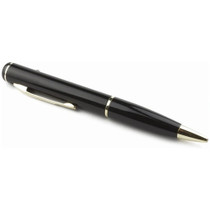
PI Pen Kit: Dual Wearable Video & Audio Recording Devices
Sale Price: $449.00
Wearable Video & Audio Recording Devices: The kit includes two premium pen-based recorders, close encounter recording. Wearable & Discreet Design: Both pens are portable and designed to blend in...


Ultrasound Microphone Anti-Recording Device Privacy Shield Protection
Introducing the Ultrasound Anti-Recording Microphone Protection: Your Silent Shield Against Unauthorized Recordings In a world where privacy is paramount, the Ultrasound...
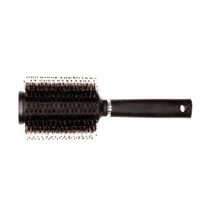

Hairbrush w/ Covert Audio Recorder
Ordinary Hair Brush Conceals A Super High Quality Hidden Microphone With one-click, you'll be able to instantly activate the super high quality recording mode inside this unassuming hair brush...

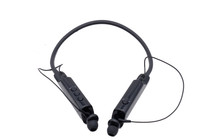
Bluetooth Headphones Secret Audio Recorder
Functional Bluetooth Headphones Capture Audio Need a new pair of headphones? Need a covert listening device? Don't settle for the same old regular headphones or an awkward-looking audio recording...
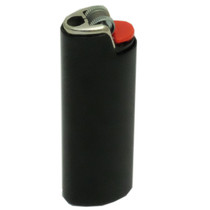

Lighter w/ Covert Audio Recorder
Fake Lighter Conceals A Super High Quality Hidden Microphone With one-click, you'll be able to instantly activate the super high quality recording mode inside this fake, unassuming lighter. There are...